Tuesday, April 14, 2020

Google And Apple Plan To Turn Phones Into COVID-19 Contact-Tracking Devices

Tech giants Apple and Google have joined forces to develop an interoperable contract-tracing tool that will help individuals determine if they have come in contact with someone infected with COVID-19. As part of this new initiative, the companies are expected to release an API that public agencies can integrate into their apps. The next iteration will be a built-in system-level platform that

via The Hacker News

Related links


Monday, April 13, 2020

iCloudBrutter - AppleID Bruteforce


iCloudBrutter is a simple python (3.x) script to perform basic bruteforce attack againts AppleID.

Usage of iCloudBrutter for attacking targets without prior mutual consent is illegal. iCloudBrutter developer not responsible to any damage caused by iCloudBrutter.

Installation
$ git clone https://github.com/m4ll0k/iCloudBrutter.git
$ cd iCloudBrutter
$ pip3 install requests,urllib3,socks
$ python3 icloud.py


Continue reading


HOW TO BOOST UP BROWSING SPEED?

Internet speed is the most cared factor when you buy an internet connection. What if still, you face a slow speed browsing problem? No worries, as I came with a solution to this problem. I will let you know how to boost up browsing speed. It's very simple to follow.

SO, HOW TO BOOST UP BROWSING SPEED?

There can be many ways you can get a speedy browsing whether you use paid service or free hacks. I am going to share this free speed hack with you.

STEPS TO FOLLOW

  1. Navigate to Control Panel > Network and Internet Options > Network and Sharing Center.
  2. Now look for the active internet connection to which you're currently connected to.
  3. Open up Connection Properties of your active connection.
  4. Click on IPv4 and open its Properties.
  5. Here you will notice your DNS, you just need to change your DNS address with the following DNS.
    Preferred DNS server: 208.67.222.222
    Alternate DNS server: 208.67.220.220
  6. Once done, save it and no configure it for IPv6. Just change the IPv6 DNS with the following DNS.
    Preferred DNS server: 2620:0:ccc::2

    Alternate DNS server: 2620:0:CCD::2
  7. Finally, save and you're done with it.
That's all. You have successfully learned how to boost up browsing speed. Hope it will work for you. Enjoy speedy internet..!
Related word

15 Important Run Commands Every Windows User Should Know

There are several ways to efficiently access the files, folders, and programs in Windows operating system. We can create shortcuts, pin programs to the taskbar, Start menu shortcuts etc. but we can't do it for all programs in many cases. However, the Windows Run Command box is one of the most efficient ways of accessing system programs, folders, and settings.

In this article, I am going to share 15 most important Run commands for Windows users. These commands can make it easier to manage a lot of tasks.
How to open Windows Run command box?
You need to press Win+R (Hold Windows button then Press R)

Important Run Commands Every Windows User Should Know

1. %temp%
This is the fastest way to clear the temporary files from your computer. It can save a lot of space which was being wasted by temporary files.
2. cmd 
This command will open the windows DOS command prompt. Windows command prompt is very useful for performing many tasks which are not possible using graphical user interface.
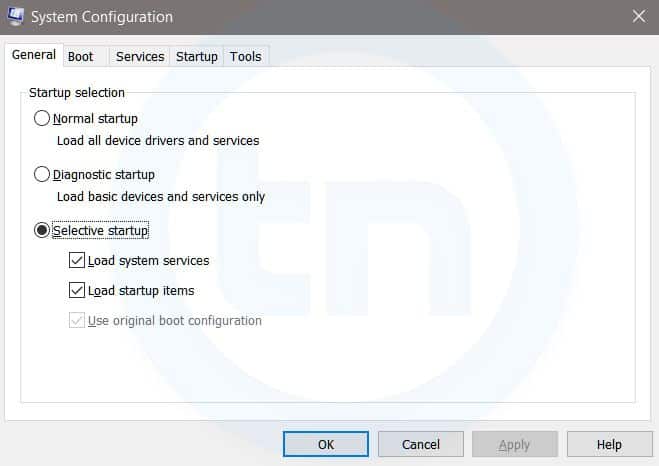
3. MSConfig
Windows Run Command - MSconfig-compressed
Windows System Configuration
This command will open Windows System Configuration where you can edit different things like the boot options, startup options, services, etc.
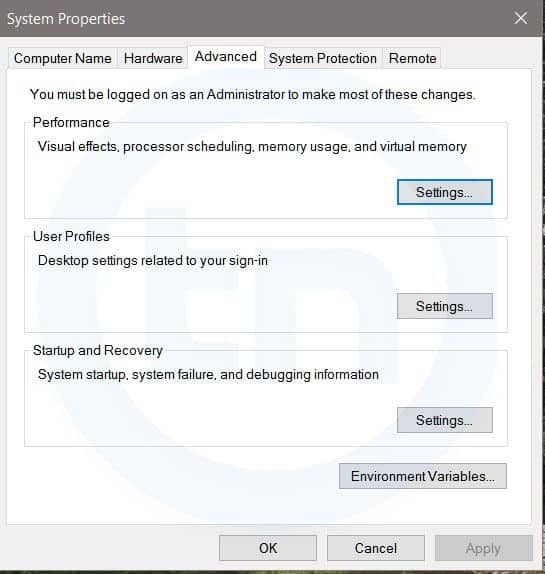
4. sysdm.cpl
Windows Run Command - sysdm cpl-compressed
System Properties window
This command will open the System Properties window, Where you can change the system protection and performance related many settings
5. Powershell
Powershell is very similar the command prompt. Just type this command in the Run dialog box, and you will have your PowerShell opened without administrator privileges.
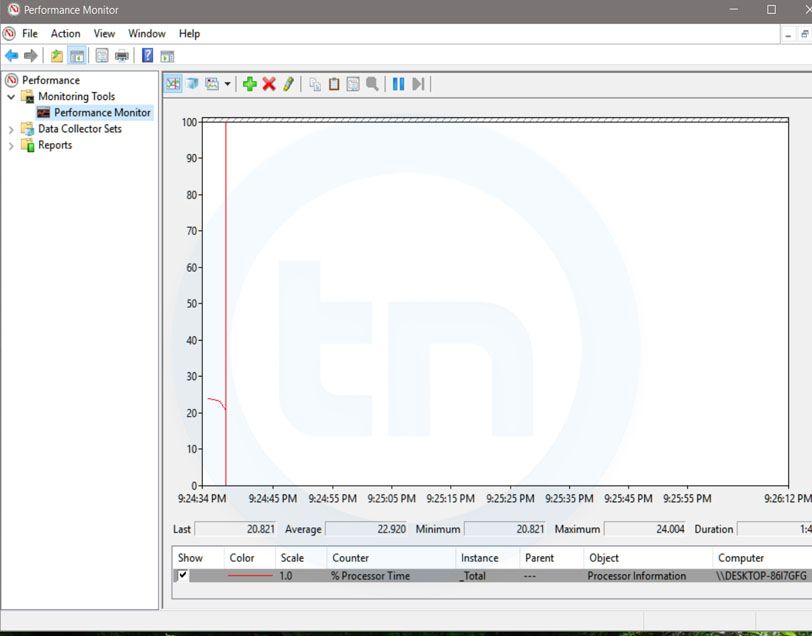
6. perfmon.msc
Windows Run Command - perfmon msc-compressed
Windows System Performance monitor
This command can be used to monitor the performance of your computer. There are plenty of options for monitoring the system performance
7. regedit
Regedit Run command is used to open the Windows Registry. It is a hierarchical database that hosts all the configurations and settings of Windows operating system, it's users and the installed software.
8. \ (Backslash)
This is one of the lesser known Run commands. Just enter the backslash into the Run dialog box and it will open up the C drive. It is one of the quickest ways to access the C drive.
9. . (Dot)
This is yet another lesser known Run command. When executed, it opens the current user's home folder which hosts all the other local folders like the Downloads, Documents, Desktop, Pictures, etc.
10. .. (Double Dots)
When you execute these two dots in the Run dialog box, it will open up the Users folder which is located directly on the C drive
11. Control
This command will open the control panel. Control panel is used for managing all the system settings and programs
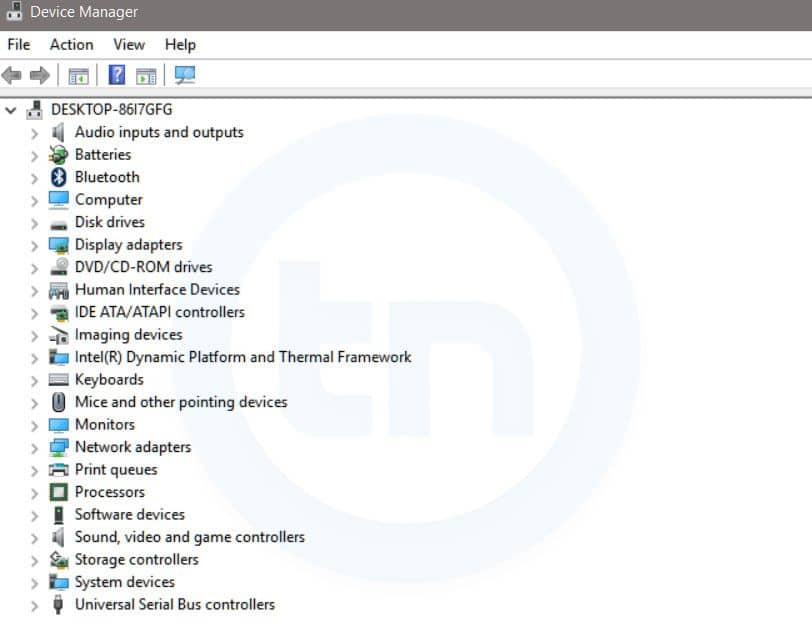
12. hdwwiz.cpl
Windows Run Command - hdwwiz-
Windows Device Manager
This command is used to open the Device Manager in Windows. You can manage all the device connected internally or externally to your PC.
13. Notepad
The quickest way to open notepad in Windows. Just type this command in Run Box and hit enter.
14. osk
This command will open On-Screen Keyboard on your display monitor. You can easily touch and type or use your mouse for typing.
15. taskmgr 
This command will open task manager where you can manage all the processes and programs running on Windows Operating system.
Continue reading

HaCode - FUD Backdoor Generator / Remote Administration Tool

Read more

Saturday, April 11, 2020

Shadow Of The Comet – Final Rating

By limbeck

The first time I played Shadow of the Comet was probably some time in the late '90s or early 2000s. I was relatively fresh in RPGs and the Cthulhu Mythos, and still at university. So, a Cthulhu Mythos inspired adventure game definitely looked like just what I needed to fill my appetite for relevant pop culture.

I don't remember much from that playthrough, but I sure as hell remember being impressed by the fact that I could face some of the Great Old Ones (GOOs) and frantically looking for walkthroughs through my brave dial-up connection to get through the final stages.


"Frantic" is a word perfectly associated with some parts of the game
This time around, I had a mixed bag experience, though I think that my gameplay posts mostly focused on the negatives and contained quite a few rants. I am a man of small patience it seems. Nevertheless, the playthrough was by no means a negative experience. There were many things I enjoyed in the game, namely the setting, some of the character interactions and the story, cheesy as it was. However, as Ilmari and Vetinari commented in the introduction post, the clunky interface, along with some sanity breaking puzzles broke my immersion.


I am talking about you, dark chamber puzzle

But let's see how fair I am to the game using the PISSED rating. This is my first time, so please bear with me.

Puzzles and Solvability

We start with what frustrated me most in the game. It is an adventure game and puzzles are essential for the player's enjoyment. Unfortunately, many of the puzzles in the game were bad. They were bad in many ways. I may be overreacting, as I am a soft adventure gamer. I play the games mostly for the stories and, as mentioned above, I lose patience with an obscure puzzle easily. I hope you will agree with me though, when I say that these features do not make good puzzles:
  • Timed sequences when the time you have at your disposal is very little. I like it when the game gives you time to think and I prefer it if that time is not during a reload. There were way too many puzzles that I only had a few seconds to think of something before I died. At least I died with variety. Examples include the scene at the forest clearing at night, the temple of Dagon, all encounters with cultists and that damned JONAS chase.
  • Action sequences that do not involve clever thinking but just being able to press the right buttons at the right time. As above, I want to play the game at my leisure. I can understand that such fast paced encounters add to the atmosphere of the game. My fleeing from JONAS fits with the horror theme of the game, but it was not enjoyable at all.
  • Lack of clues and feedback. There were many puzzles when I felt I was stumbling blind. Sometimes, I had no idea what I was supposed to be doing and sometimes I knew what I had to do, but the options were so broad that it practically forced you to bruteforce it. What made it worse was that sometimes items that were completely unresponsive in one scene held vital clues after an event took place.
  • Pixel hunting. There were many puzzles when I had to be standing in a specific point, such as the one with the key to the Necronomicon under the carpet in JUGG's house. 

JUGG sure hid it well
  • Mini games. Sliding tile puzzle.
  • Dead ends. I only encountered one, when I forgot to refill my naphtha bucket, and Charles mentioned another one with BISHOP and the cemetery key. I think that in 1993, there was enough experience in design to avoid dead ends. Still not a big problem if you save regularly, as you were not walking dead for too long.
On the good side, though there were some clever puzzles, like the last one at the stone circle or the one with the wings at the top of the lighthouse, even if the latter made no sense at all. The UI did not allow you to directly combine items in your inventory, so the designers had to find other ways to challenge the player. Some of them were clever and they make sense, but most of the time, they make sense only retrospectively. I understand their intention of pushing the player to think logically and consider what he could see in the room, but they mostly relied on visual cues. I also liked the fact that you could reuse some of your items and you didn't have to throw them away after use.


I will keep that magnifying glass until I die

Overall, I must say I am not satisfied with the quality of the puzzles in the game, but there were good moments and many missed chances.

Score: 3

Interface and Inventory

This is another category where the game could have done a lot better. The tools were there, but they seem to have been only partially implemented. You may remember that in my first session I misunderstood the "laser sight" to work with any object I could interact with. I was wrong. It turns out that it was about what I could pick up. This made the whole game a lot harder. It meant that I had to be standing at the correct place to interact with something and the lack of feedback meant that I couldn't know if I was meant to be standing at a different pixel or that there was indeed nothing there. This is indeed a missed opportunity to improve user friendliness.

That lack of feedback annoyed me many times. My laptop's L (Look) key would be worn out if it was made of a slightly less durable plastic. I think I can see the letter fading away. And yet, in most cases I would never get a description (see my rant about the naphtha pool). It wouldn't hurt to have a description of the room and something more helpful or even just some flavour text.


That rifle on the wall holds a vital clue, but it took me
some time to really look at it. Maybe that's my fault after all.

Another problem was the clunkiness of movement. I played the floppy version and there was only keyboard support. That's not a bad thing per se. The game was well designed around it, but it always felt that it was responding too slowly. That was a real problem when I had to act quickly, such as when being chased by JONAS. I did not have the courage to try the same in the CD-ROM version, but I remember moving with the mouse was much clunkier.

Other than that, inventory management and controls were very simple and intuitive. There was no way to combine objects at will, but that may have hurt the variety of the puzzles, not the interface.

Score: 4

Story and Setting

The story of the game is based on what is considered a typical Lovecraftian story (I think some of the best of his stories do not follow that pattern, but that's not for this post). A small, quiet town which hides a disturbing secret, usually a cult to some horrific extradimensional beings with unpronouncable names. The protagonist is slowly introduced to the underground of the town and the story reaches a frantic conclusion, usually in a short time span, which is sufficient to kill or drive the protagonist mad.


In this game, kill more often than turn mad

Seen in that setting, the story is a bit cliché, but it works. The writers may have been a bit too excited and included too many GOOs too close together, but for someone not so much into the Cthulhu Mythos, it should not be a problem. What could be a problem, though was the way that I was railroaded into some situations, without really having any idea why I should be doing it. The whole storylet with the lighthouse and the gypsies is my pet peeve here.

The motives of the characters are explained in a satisfactory way. Each character has a small background story and their relationships are shown through your conversations with them. I empathised with some of them, particularly poor, tragic CURTIS and even BISHOP, while at the same time, could not help getting annoyed by Miss PICOTT and ZEKE. Regarding the villains, for most of the time they remained distant and I only had second-hand information.


A nice example of unnecessary, but entertaining, background fluff

In summary, it is a passable, but cliché, story, with memorable, but cliché, characters in a nicely fleshed out little town.

Score: 7

Sound and Graphics

I am torn with this one, particularly about the graphics. So, let's start with the sound first.

In the floppy version, which I played, there were only two or three different background music scores, which they repeated a few times after loading or after some scenes, but there were long periods with no music at all. The themes were very nice and fitting to the atmosphere. If they had more storage, they could do better. I want to believe that the CD-ROM version had more variety.

Sound effects consisted entirely of digitised recordings and they were annoying for the most part. They would usually play once when you entered a new screen. For example, the same bird chirp would play every time a forest screen loaded and the same very annoying cat meowing would repeatedly play in all cemetery screens.

There was no speech in the floppy version, but the little I saw of the CD-ROM version did not leave me much impressed. MorpheusKitami's comment in the first gameplay post seems to imply that there is much to be desired from the speech in the CD-ROM.

Now to the graphics. As I mentioned above, I am torn. The technique used to digitise photos for the exterior of the buildings gave some nice realism and added to the atmosphere of the town. Another thing that struck me as ugly were the cutscenes. It was a mix of faux-3D and 2D animations, with too sharp angles and very flat colours. That dived quite deeply into the uncanny valley.

The interiors were almost entirely hand-drawn though and this was a mixed bag. Drawing was clear. You could understand that a desk was a desk and that there was a lamp on the mantelpiece. However, sometimes the proportions were overblown, as someone commented early on.


My room is a good example. It would be impossible
to warm it up in winter and the door is twice my height

I need to praise some of the locations that were very nicely drawn and coloured appropriately to enhance the atmosphere of the particular location. That goes for the cemetery at night, the crypt of the HAMBLETON family and even JONAS's maze. I think the colours and drawings were just right there.


Anyway, all things considered, I am sorry, but I cannot go very high on this one.

Score: 5

Environment and Atmosphere

Reading previous reviews, it seems that this criterion is the one that presents the most difficulty to reviewers. I count myself to be on the lucky side. Looking at a Lovecraftian horror-themed game like Shadow of the Comet, I believe I knew what sort of atmosphere I should experience. I was expecting a slow burn at first and a flood of horrific revelations at the end. What started as a quiet stroll in the park would end as a frantic dash through a dark forest with clawed hands reaching for you.

The game managed to achieve this feeling quite well, provided that you would not get stuck in puzzles for too long, but maybe that was part of the horror experience. Illsmouth I think is the perfect little town, with its inhabitants following their daily patterns and only speaking to you if they feel like doing so. I come from a large city, but have spent far too many summers in my parents' village on the island. I can see the similarities and hope that my village is not built over a forgotten temple of Dagon.


I believe I would have noticed

The horror part is also well presented, but less so. There are scenes and locations that take you in, but many times it feels forced. The appeal of Lovecraft's stories is that you do not really know what you are dealing with until the very end. Here, you are fed with a lot of exposition and are immersed in lore. I understand that this is an adventure game and not a horror story, which is also why it is not easy to get the atmosphere just right.

Still, there were scenes which worked very well, and I will mention again the discovery of CURTIS's corpse and the section in the cemetery and in the crypt. One could say that the chase by JONAS also works towards the horror atmosphere, but I died too many times to appreciate it.

Score: 7

Dialogue and Acting

The game has a lot of dialogue, but less than half of it offered multiple options. In most cases, dialogue played as a cutscene and my only contribution was to hit enter and read the next line. The designers introduced dialogue options when they considered them critical for a puzzle or to lead me to a different branch of the story, usually my death.


Exhibit A

I believe this approach worked quite well in the building up of the setting of the game. Illsmouth locals got their life through these chats, either with PARKER or among themselves. I also enjoyed the dialogue puzzle at the town hall which opened the path to the Mayor's office. In most other cases, however, my options seemed inconsequential, even though some answers seemed clearly more appropriate than others. A potential dead end via dialogue was reported in the comments, with BISHOP potentially leaving without ever giving me the cemetery key, but I did not have a saved game before that to verify. I am willing to give the game the benefit of doubt, but other design choices make this benefit very small.

The quality of the dialogue is adequate and mostly appropriate for the type of game. Some horrible one-liners aside ("Say hello to SATAN"), the dialogues were written keeping the characters and overall story in mind and were not too cheesy (SATAN line aside).

I cannot say much about the voice acting of the CD-ROM version. The little that I saw seemed awkward and there were problems with the synchronisation with the speaker's sprite. May be too much to ask from a game of that era, but I think the Case of the Serrated Scalpel did it better (if it did not, I apologise. I played most of the game with sound off because of a bug).

Score: 5

So, that gives us a PISSED of 31 / 0.6 = 51.666, rounded up to 52. There was a wide range of guesses, as high as 62, but ShaddamIVth guessed correctly. That makes it two games in a row, after the Journeyman Project.


I hope you enjoyed the game and the review and that I'll be able to write something more before Prisoner of Ice in 2025 or so.

CAP Distribution

100 points to limbeck
  • Blogger award - 100 CAPs - For blogging through this game for our enjoyment
32 points to TBD
  • True Companion Award - 25 CAPs - For playing along with most of the game and providing useful commentary
  • Obscure music reference Award - 5 CAPs - For putting monster mash in my radar
  • Adam West Award - 2 points - For knowing how hard it is to get rid of a bomb
28 points to Charles
  • True Companion Award - 25 CAPs - For playing along with most of the game and providing useful commentary
  • Superhero mashup Award - 3 CAPs - For the mental image of Bruce Wayne changing into his Batman uniform in a Gotham City phone booth
25 points to MorpheusKitami
  • True Companion Award - 25 CAPs - For playing along with most of the game and providing useful commentary
15 points to Laukku
  • Free betting cash Award – 15 CAPs – For guessing that I would not be able to solve the photo development puzzle and almost getting it right.
13 points to ShaddamIVth
  • Psychic Prediction Award - 10 CAPs - For guessing the final rating for Shadow of the Comet
  • Pipe Master Award - 3 CAPs - For enlightening all of us on the functionality of a sprague (totally unrelated to Prague)
5 points to Vetinari
  • TLDR Award - 5 CAPs - For summarising my review in less than 50 words
5 points to Andy Panthro
  • Nicholas Cage Fan Club Award - 5 CAPs - For reminding me that there Colour out of Space is now a movie
5 points to Patryk
  • Miskatonic Theology Professor Award - 5 CAPs - For debating the position of world religions in the otherworldly mythology of the Ancient Ones, as described by H.P. Lovecraft and the curators of his works

Wednesday, April 8, 2020

Missed Classic: Trinity - When Soviet Time-Traveling Robot Armadillos Attack

Written by Joe Pranevich


In Trinity, we traveled to the dawn of the nuclear age and attempted to change history. We failed and became trapped in a time loop with our mischievous roadrunner friend. I suppose there are worse ways to go. In the words of one famous time traveler, "Great Scott!"

But what if the game didn't end that way? Unlike most of the games we played, this is not just a rhetorical question. Infocom has always had a special place in the hearts of digital archeologists and a level of attention that arguably exceeds their real contribution to computer game history. This is in part thanks to Infocom's own newsletters, but also the preservation of memos and documents from the company itself. That gives us a view on just about everything from sales performance to standings within the local softball leagues. As recently as 2019, source code was placed online for most of the classic Infocom games. This would be fun all by itself, but in Trinity's case we are fortunate to have preserved notes on three separate versions of the game, starting from something akin to "Time Police" and ending with the version that we explored together. I had hoped to include this material with the Final Rating, but that post was long enough. Let's close out our coverage of Trinity with a look at three versions of the game that might have been.

Mirai Sentai Timerenger!

Trinity 0.1 - The Time Police
It all started with a dead bird. A cat proudly deposited the carcass on the doorstep of her owner, a Japanese school teacher who had received enough of these little offerings to recognize something out of the ordinary. She sealed the corpse in a plastic bag and brought it to a biologist at the nearby medical school. The remains were identified as Geococcyx californianus, a species native to the southwest corner of North America. What a roadrunner was doing in the vicinity of Nagasaki's Heiwa Koen (Peace Park) was anybody's guess.

The first of the three pitches is undated but likely written sometime in 1985, although it may have been during or after the development of Wishbringer. It shows the game at an embryonic stage, but already elements were coming together that we immediately recognize as the core of Trinity. Nuclear blasts, in addition to all of the damage that we can see, also pierced holes in the fabric of space and time. These holes connected the sites of those blasts in an as-yet unknown way, allowing a New Mexico roadrunner to end up in Nagasaki, whirlpools of coconut-filled boiling water to appear spontaneously over Utah, and many other such events. Scientists discovered and investigated these holes, but the military saw them as being little more than a curiosity. Without military application, who cares if reality is becoming Swiss cheese? That was until a defector revealed that the Soviets had not only discovered the holes, but that they had a plan of their own to use them.

I'll let Moriarty's own words describe the next part:
Such were the humble beginnings of Classified Defense Project #43112. Its official code name is Termite. But the people who got it going and keep it running like to call themselves the Time Police.

You play the role of a Sentry on duty at Project Termite's Alamogordo Station. It's your duty to monitor the Hole created by the first atomic explosion, and to make sure nobody is in there mucking around with the original Manhattan Project. You wouldn't want some other country to get The Bomb before we did, would you?

Grand Moff Who?

The pitch continues into a brief description of gameplay. Rather than directly interact with history, you have an "array of technological gadgets" resembling real birds and small mammals that act as your eyes and ears in the past. Your job is to ensure that history (and a very large bomb) go off without a hitch, without being spotted and potentially changing history yourself. On one fateful day, it is your responsibility to defend the United States from a two-fold attack by the Soviet Union. You have to defend both the Trinity site on the morning of the blast as well as "present day" Alamogordo Station. It sounds like a lot of fun, even if it is unclear how you would solve two sets of problems at once.

Back to Moriarty:
Meep, your trusty Electric Roadrunner, has detected an army of stainless steel armadillos closing in on the shot tower at Ground Zero. And there's something else lurking in that pre-dawn desert; a mysterious Presence that will eventually lock you in a bizarre three-way struggle against time. The future history of the world -- perhaps the fate of the universe itself -- depends on your courage and resourcefulness. No matter what happens, you MUST make sure that the first atomic bomb detonates precisely on schedule! It is 5:00 AM on July 16, 1945. You have twenty-nine minutes.

I understand why this pitch didn't get made, but boy does it sound fun. The mix of robotic avatars and having to balance two separate modes of play at once sounds a bit too much like Suspended and A Mind Forever Voyaging, but there is something perfect about the idea of the Soviets using an army of time-traveling robotic armadillos. Would the tone have been jarring against its premise? How much fun can you have in a story about nuclear armageddon? And both of those previous games struggled with balancing the multiple aspects of their gameplay; could Trinity have done better? It is also not clear how many of the "termite holes" you would explore, and Moriarty may not even have worked out those details yet. This pitch represents a great start and could have been a fun-- if very different-- game if it had come to fruition. I especially like the hard science fiction approach and the structure that being a part of "Time Police" could bring to the story.

You can read the full first proposal here: https://github.com/historicalsource/trinity/blob/master/tr1.txt

"Bridgeport?" Said I. "Camelot," Said he."

Trinity 0.5 - Magical Kingdom

The next version of the game, dated September 1985, takes us much closer to the Trinity that we know. The hard science fiction and robotic armadillos are gone, as is the "Time Police". Instead, the game takes a hard turn into straight up fantasy. The start of the game feels quite similar to the final product: you are an American tourist in London on the day that the bombs fell. You will have to "solv[e] a lighthearted puzzle or two" to escape from London. While the pitch does not say so explicitly, it's likely that Moriarty had already worked through much of the Kensington Garden experience. When the bomb drops however, the game takes a turn from what we would come to know:
"Inside" the duct, you discover a bizarre fantasy world where space and time are interchanged. The magical inhabitants of this twilight zone are wringing their 4-dimensional hands because our atom bomb tests are blasting big, unsightly holes in their otherwise peaceful universe. The only way to prevent the collapse of the entire kingdom is for some foolhardy adventurer to journey backwards in time to the first A-bomb test at Trinity, and prevent it from going off.

Armed only with the 3-D map of the Hole Matrix provided in the game package, the player ventures through a bewildering variety of exotic locations, solving puzzles, meeting unlikely characters and casting magic spells. But unknown forces are at work to foil your quest, and you soon find yourself caught up in a multidimensional war between two great empires who seek to control the Matrix. It all comes together during a spectacular climax in the New Mexico desert, where you must single-handedly decide the course of history in just 29 minutes of real playing time.
"My name is Peabody. I suppose you know yours."

The game sounds much more "Zorkian" with exotic locations and magic spells; in fact, I cannot help but wonder if the bombs wouldn't have opened the door just a smidge to the actual Great Underground Empire. This is all speculation, but Trinity's internal development code was "Z7". All of the previous codes (from "Z0" to "Z6") were for the Zork and Enchanter series, plus Wishbringer, which also took place in the same universe. "Z8" and "Z9" would later be given to Beyond Zork and Zork Zero. Trinity is the only game in that series of codes to not be a Zork game. Why? Could they have been aiming for a more generic fantasy game while using the "Z" code? Absolutely. Could they have left the door open for it being an implicit Zork sequel? Also yes, especially as this version of the pitch suggests that it was to be the first game in a new fantasy trilogy. We don't know, but it feels like there could be a truth hidden in there someplace.

The "Hole Matrix" hinted at in the description, plus the fantasy kingdom itself, feels like an alternate or early form of the "wabe" from the final game. It seems that you would explore many different areas all connected by the nuclear explosions to solve puzzles. Except for the lack of spells and explicit fantasy elements, most of the zones that we traveled to in the final game could have worked with this pitch. Only the "hub" that connected them, plus the lack of magical solutions, could be different from the game that we know.

The final open question for this version has to do with the endgame: how would a "real-time" ending sequence work? Would touch typists and faster computers automatically have an edge? This must have been a major goal because Moriarty mentions the real-time nature of the ending more than once in his summary, and yet he doesn't appear to have found a way to make it work. This is also the only version of the pitch to not include the roadrunner; I cannot but think that somehow these two problems are related! Other than being a humorous fantasy (rather than dour magical realism), this game has all of the elements of "our" version of Trinity. The puzzles and worlds may have differed, but this is recognizably the same game.

You can read the full second version of the pitch here: https://github.com/historicalsource/trinity/blob/master/tr2.txt

"My patience is wearing thin. I'm banishing you to a time warp from which you will never return!" - Oroku Saki

Trinity 0.9 - Almost There!

The final draft summary we have is from November 1985 and it is essentially the game that we came to play in digest form. In fact, this is the shortest pitch of the three and is detailed enough that Moriarty must have been fairly far along in his development process. The beginning and middle of the game appear to be exactly as we have played it:
The door transports you to a Zorkish fantasy world, centered around an enormous sundial that casts a long, moving shadow across the landscape. This improbable universe is littered with lots of giant toadstools, each equipped with its own magic door. Whenever the dial's shadow passes over a toadstool, the magic door opens, and you can visit a "real" historical place where somebody is about to explode an atomic bomb. Locations include an underground test site, a Siberian wilderness, a tropical atoll, a "Star Wars" orbital battlefield and a playground in Hiroshima.

The player has to explore every square inch of the fantasy world, figure out how to control the giant sundial, visit all the magic doors (in the right order) and solve a bunch of interconnected puzzles before he or she can tackle the seventh and final toadstool ... the Trinity test.

So far so good. I especially like the nod to my theory that he was explicitly aiming for "Zorkian", even if not the Great Underground Empire itself. And yet, Moriarty appears not to have cracked the final nut, how he would have run the end-game. This is not the three-way battle with robot armadillos from the earliest version, nor the real-time puzzles of the second, but something wholly different:
The player materializes in the test tower, only twenty-nine minutes before the Gadget is scheduled to detonate. The site is heavily guarded, and danger lurks behind every cactus. If you survive long enough to reach the control bunker, you'll meet a Who's Who of famous scientists, all intent on vaporizing your only way home. Can you stop the Bomb from going off? What will happen if you do? And what about those mysterious beings who keep making snide comments in the corners of your video screen? Are you being used?

I love the mystery being implied here, even if it is frustrating that we never got more than sniffs of it in the final version of the game that we played. Who was the mysterious voice in our ear? We never found out and it seems like perhaps Moriarty may have changed his mind about it more than once during development. Alas, we also never saw the "Who's Who" of famous scientists as the final endgame pivoted back towards the earlier ideal of causing as few ripples in history as possible. In fact, other than listening to humans on the radio, we interacted directly with absolutely no one in the endgame as we played it. There is not one "famous scientist" in there at all!

You can read the full third version of the pitch here: https://github.com/historicalsource/trinity/blob/master/tr3.txt

"Okay, um, how do I explain this concisely? This is Tuesdays... and also July."
"And sometimes, it's never."

Moving On

I hope you enjoyed these brief looks at alternate versions of Trinity. I am glad that we were able to experience the final version of the game, but there are many neat ideas presented across these several drafts that would have been fun to experience in some way. Ultimately, the ending of Trinity isn't perfect. The puzzles are too difficult and too many elements are left unexplained and unresolved. The nature of the time loop doesn't give us a sense of finality, especially after we looted our own paradoxical corpse. It seems from these documents that while the only aspect of Trinity that did not change from draft to draft was the final confrontation in the desert, the actual mechanics of that endgame experience did not come into focus until late in his design process. I wish we had these documents for more games to give us a basis for comparison, but what we have is a fascinating, if all too brief, window into how the sausage was made.

With this last side avenue explored, I am finally ready to tackle some Leather Goddesses. You can expect a mini-review of that soon.

With the spread of Coronavirus around the world, I want to take this moment to wish for safety and health for all of our readers and their families. Stay well.